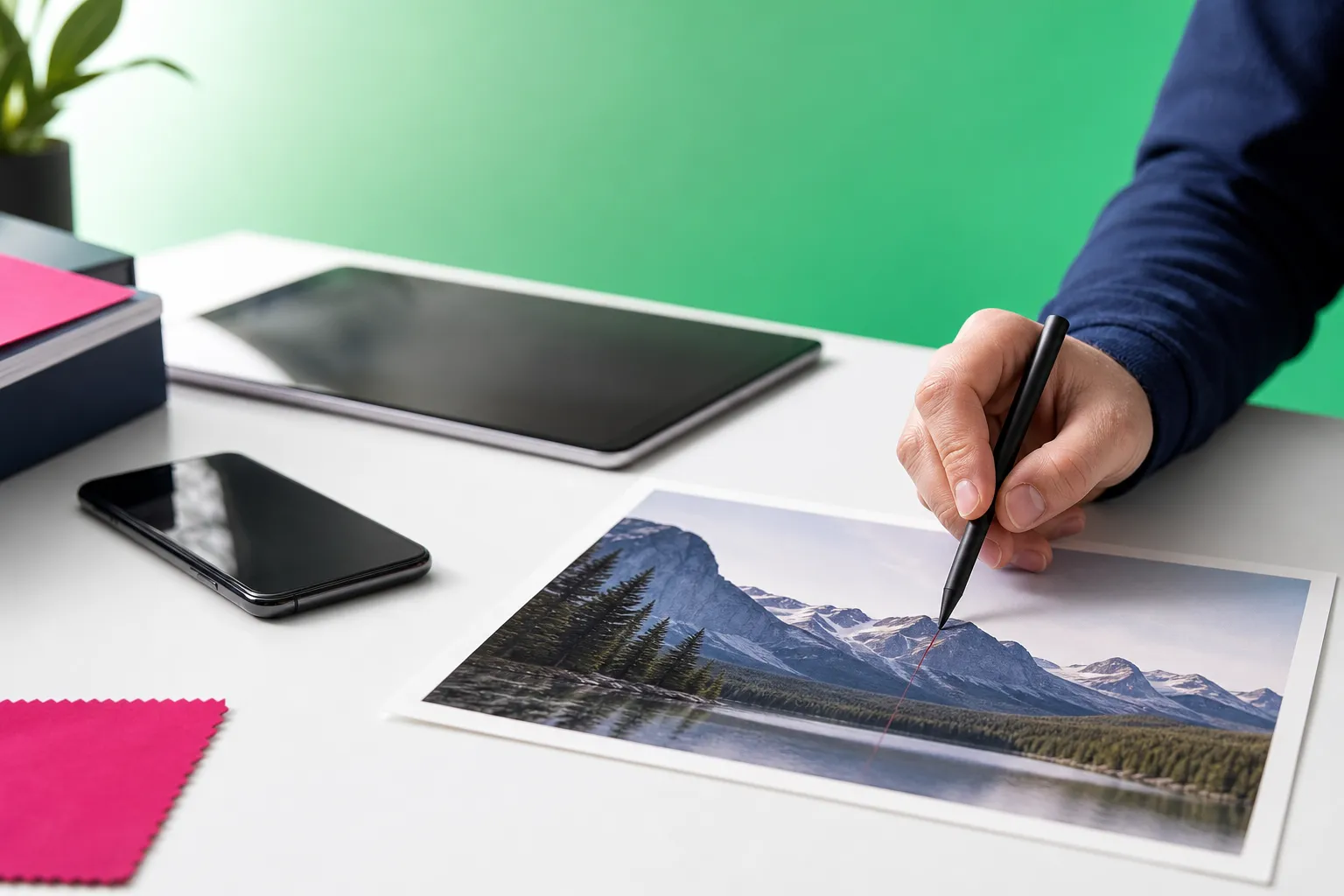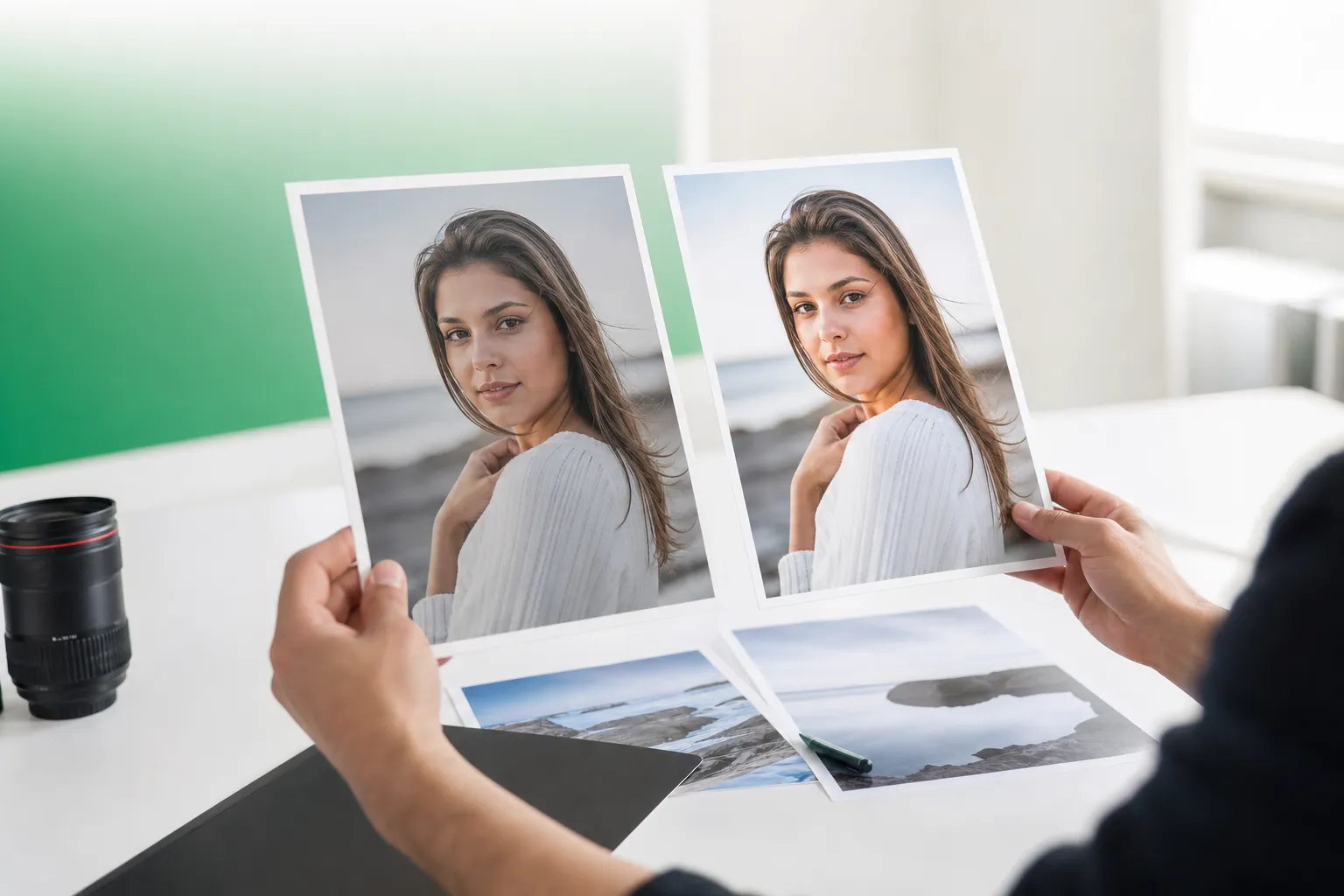
If reflections on glass, glossy surfaces, or bright highlights are pulling attention away from your subject, a reflection eraser app can help clean up the image on your phone. The key is knowing what mobile retouching can realistically fix, what usually needs manual refinement, and when a reflection has covered too much detail to disappear naturally.
This guide focuses on TouchRetouch, a mobile photo editor developed by ADVA Soft GmbH, based in Berlin, Germany. It explains where the app works well for reflection cleanup, which tools to use, and how to get more believable results in travel photos, portraits, product shots, and everyday images.
What a reflection cleanup app can realistically do
Why reflections are sometimes removable and sometimes only reducible
People usually look for help with unwanted reflections in windows, storefront glass, polished tables, mirrors, sunglasses, car panels, and travel photos. In many of these cases, the problem is not the surface itself but the extra visual layer sitting on top of the real subject behind it.
A reflection remover app works best when the unwanted reflection is small, faint, or sitting over a simple background. If the reflected shape is strong and covers important image detail, the app can often reduce the distraction, but it cannot fully recreate information that was never clearly captured in the photo.
How scene complexity affects the final result
Scene complexity matters more than many people expect. A faint indoor reflection across blue sky, a plain wall, or an out-of-focus background is usually much easier to clean than a large reflection crossing a face, printed text, patterned clothing, or detailed architecture.
Contrast also changes the result. A pale reflection on a museum display case is often easier to blend away than a dark silhouette reflected across a bright storefront. The more the reflection interrupts edges, lines, and textures, the more manual repair is usually needed after the first pass.
When mobile retouching is a good fit
TouchRetouch is a mobile photo-editing app for iOS and Android designed for object removal and photo cleanup. It helps remove many kinds of reflections and reflective highlights from photos, but it is not a guaranteed one-tap fix for every image, and it edits photos only, not videos.
For everyday users comparing apps before downloading, that honest limit matters. Mobile retouching is a strong fit when you want to clean up a travel shot through glass, soften a bright hotspot on a shiny surface, or improve a casual portrait without moving to a full desktop workflow.
If your goal is practical photo reflection removal on the go, this type of app makes the most sense when the distraction is visible but not overwhelming. For severe reflections that completely block the subject, no mobile editor can fully reconstruct missing detail with perfect realism.
How TouchRetouch helps remove reflections from photos
Use Remove Objects for isolated reflective distractions
The core TouchRetouch tool for photo reflection removal is Remove Objects. You mark the unwanted reflective area with the Brush tool or Lasso, adjust brush settings for tighter control, and use Restore if your selection spills into the subject.
This works especially well for isolated reflective marks such as a bright streak on a polished table, a faint window reflection over a plain wall, or a distracting highlight on a car panel. The app’s edge-aware removal is designed to blend the selected area naturally into nearby texture rather than leaving a hard patch.
Use Erase AI for broader background cleanup
Some images have more than one distraction at once. A travel photo through glass may include a reflection, a street sign outside, a passerby in the background, and a shadow near the frame. In that kind of scene, Erase AI can help clean up surrounding distractions before or after you target the reflection itself.
Erase AI is not a dedicated reflection detector. Instead, it intelligently detects and removes background distractions such as people, street signs, trash cans, stop lights, shadows, and other unwanted elements, which makes it useful when reflective artifacts appear alongside clutter in the same image.
Use Clone Stamp to rebuild texture by hand
Automatic cleanup does not always finish the job on its own. If a reflection crosses brickwork, wood grain, fabric texture, or repeating architectural details, the removed area may need a little manual rebuilding to look more consistent.
That is where Clone Stamp comes in. You copy nearby texture into the repaired area to smooth over leftover inconsistencies, rebuild a line, or restore a repeating pattern that the automatic pass could not fully match.
Use Blur when softening a highlight works better than full removal
Not every reflective spot needs to vanish completely. A tiny hotspot on sunglasses, a bright glint on a metal appliance, or a small shine on a glossy tabletop can sometimes look more natural when softened rather than fully erased.
The Blur tool gives you that option. Instead of forcing a full removal that may create a visible patch, you can reduce the attention on the highlight so the eye returns to the main subject.
TouchRetouch is free to download; premium AI features require a paid subscription. Check the App Store or Google Play for current pricing, which varies by region. Premium AI features include Erase AI and Blur, and some AI-powered features require an internet connection.
One practical advantage for mobile users is export quality. TouchRetouch preserves original photo quality and EXIF data on export, so your cleaned-up image keeps its metadata and does not lose quality just because you edited it on a phone or tablet.
If you want to go beyond reflections and clean up other distractions in the same image, this is also a good time to explore how to remove objects from photos on iPhone and Android.
Best use cases for a reflection eraser app
Window reflections in travel and city photos
Travel photos are one of the best matches for this workflow. If you shoot through a hotel window, train window, observation deck barrier, or café glass, you often end up with faint indoor reflections floating over sky, clouds, plain walls, or distant buildings.
In those cases, it is often possible to remove reflections from photos by selecting the reflected shape with Remove Objects and then refining any leftover texture with Clone Stamp. A pale lamp reflection over blue sky is a much easier fix than a large indoor silhouette crossing a skyline full of sharp windows and edges.
Storefront glass and museum display shots
Storefront and museum photos are more complicated because they often contain layered reflections. Traffic, signs, pedestrians, interior lighting, and the display itself can all overlap in the same frame.
A reflection cleanup app can still help here, but the process is usually more gradual. Start by removing the most distracting reflective shapes, then repair edges by hand where the glass overlaps text, product outlines, or display labels.
For example, a bright reflection on a museum case over a dark background is often manageable. A busy street reflection across lettering on a shop window is still editable, but it usually needs a mix of Remove Objects and Clone Stamp rather than a single automatic pass.
Shiny tables, metal surfaces, and product backgrounds
Polished furniture, appliances, decorative objects, and product backdrops often pick up small bright streaks or hotspots. These are strong candidates for mobile cleanup because the surrounding texture is often smooth and consistent.
If the highlight sits on a uniform stainless-steel panel, a glossy tabletop, or a clean product background, the app can often reduce it effectively. When the reflection bends around detailed logos, engraved text, or patterned surfaces, a lighter touch usually looks more believable than trying to erase everything.
Stray reflective highlights in portraits
Portraits can benefit from reflection cleanup too, especially when the distraction is near the subject rather than directly on the face. A bright patch near hair, a reflective streak on clothing, or a hotspot in the background can often be softened or removed without changing the feel of the image.
Reflections crossing eyes, facial features, or sharp jawline edges are harder. In those cases, selective Blur or a partial cleanup often looks better than aggressive removal, because the original detail under the reflection may not be fully visible in the source photo.
Travellers, social media creators, families, and casual mobile photographers are all strong fit audiences for this kind of editing. The goal is not a perfect reconstruction of every difficult scene, but a cleaner image that feels more natural and less distracting.
For broader distraction cleanup beyond reflections, the photo cleaner guide for removing distractions from images offers a useful companion workflow.
Reflection cleanup vs. full glare removal
What counts as a reflection artifact
Reflections and glare are related, but they are not the same problem. Reflection cleanup usually means removing mirrored or semi-transparent visual elements caused by glass or shiny surfaces, such as a room light reflected in a window or a passerby reflected on a polished table.
These artifacts often have a shape you can identify and target. They sit on top of the real scene and compete with the subject, even when they are faint.
What glare means in photo editing
Glare usually refers to bright haze, washed-out shine, or strong light scatter that reduces visibility across a larger area. Instead of looking like a distinct reflected object, glare often appears as a broad bright veil or an intense shine that lowers contrast.
That difference matters when choosing a tool. A glare removal app approach often focuses on reducing brightness and haze, while reflection cleanup focuses on removing a visible shape or highlight from a specific part of the frame.
When to use this guide and when to read the glare guide
Some photos contain both issues at once. A window shot may have a reflected indoor lamp plus a bright washed-out patch from direct light, which means you may first reduce the reflective shape and then deal with the remaining brightness separately.
This article focuses on reflections and reflective highlights in photos. For broader glare-related situations, including glasses glare, bright shine, and related cleanup strategies, read remove glare from glasses and bright reflections in photos.
Severe glare can permanently obscure image detail. If the subject behind the bright area was not captured clearly in the original photo, no retouching app can fully reconstruct every hidden feature with natural accuracy.
A simple workflow for cleaner results on mobile
Start with the smallest distracting areas first
A good mobile photo retouching workflow starts with diagnosis. Before selecting anything, decide whether the reflection is small and isolated, broad but low-contrast, or crossing important details like faces, text, frames, or building lines.
Then begin with the easiest visible distractions first. Smaller selections usually blend more naturally than one huge selection covering the entire reflective area.
- Identify the reflection type. Small hotspots, faint window reflections, and layered storefront reflections each need a slightly different approach.
- Open Remove Objects. Use the Brush tool or Lasso to mark the most obvious reflective element first.
- Keep the selection tight. Avoid grabbing extra detail around the subject if you can help it.
Zoom in and use tighter selections around edges
Zooming in is one of the simplest ways to improve results. Edges around faces, window frames, text, and architectural lines reveal retouching mistakes quickly, so these areas deserve more careful selection than broad empty backgrounds.
If your brush selection removes too much, use Restore to bring back the parts that should stay. This is especially helpful when a reflection runs close to hair, clothing seams, product edges, or lettering on a sign behind glass.
- Check the edges closely. Look at corners, outlines, and straight lines before moving on.
- Use Restore where needed. Pull back any over-selected area that affects the subject.
Refine problem spots with manual texture repair
Automatic object removal works best on uniform backgrounds. If the scene includes brick, foliage, patterned fabric, tiled floors, or detailed architecture, expect to do some manual refinement after the first pass.
Use Clone Stamp to copy nearby texture over leftover artifacts or repeating patterns. For example, if a reflection removal leaves a soft patch in a row of window frames or a break in wood grain on a polished table, sample from a nearby clean area and rebuild the texture gradually.
- Switch to Clone Stamp for texture gaps. Match nearby texture, direction, and pattern as closely as possible.
- Review the whole image. A fix that looks good zoomed in should also look natural at full size.
Use Blur selectively when realism matters more than total removal
Some reflective highlights are too small to justify a heavy repair but still distracting enough to pull the eye. In those moments, Blur can be the more realistic choice.
If a tiny hotspot remains on a shiny appliance, a glass frame, or a glossy tabletop, soften it instead of forcing a full erase. The result often feels cleaner because the image keeps its natural lighting while losing the sharp distraction.
TouchRetouch also includes in-app tutorials, which are useful if you are new to this type of mobile editing. They help you learn when to trust automatic removal and when to switch to manual cleanup for a better finish.
If you also want to improve the overall look of the image after cleanup, these ways to enhance photo quality on your phone pair well with reflection editing.
What to look for when comparing reflection removal apps
Precise selection tools for difficult edges
If you are comparing options before downloading, start with control. The best app to remove reflections from photos should let you mark unwanted areas precisely, especially near difficult edges like faces, text, frames, and product outlines.
Look for brush-based marking, Lasso-style selection, adjustable brush size, and a way to restore over-selected areas. These controls matter because reflections rarely sit in neat, isolated shapes.
AI-assisted cleanup for faster first passes
AI-assisted cleanup is useful when the image includes more than one distraction. It can speed up the first pass by removing background clutter around the reflection, such as people, signs, shadows, or street elements that compete with the subject.
Still, AI works best when paired with manual control. A good app should help you move quickly through simple areas while still giving you the option to refine the result when the scene is more complex.
Manual refinement options for realistic repairs
Manual repair tools are not optional in this category. Reflections often leave behind texture gaps, broken lines, or repeating patterns that need hand refinement to look believable.
That is why Clone Stamp is such an important feature to look for in a reflection cleanup app. It gives you a way to rebuild wood grain, wall texture, architectural lines, and other details that automatic removal cannot always match perfectly.
Selective blur is another useful option. Small reflective highlights do not always need full removal, and a gentle softening can be the more natural fix when the surrounding texture is delicate.
Export quality, platform support, and ease of use
Export quality matters just as much as editing tools. Check whether the app preserves image quality and metadata after editing, especially if you care about keeping original EXIF data for travel, family, or catalogued photo libraries.
Platform support matters too. TouchRetouch is available on iOS and Android, including iPhone, iPad, and iPod touch with iOS 14.0+, Mac with Apple M1+ via macOS 11.0+, Apple Vision via visionOS 1.0+, and Android through Google Play. It is not a standalone desktop editor.
TouchRetouch is purpose-built for object removal and photo cleanup rather than trying to do every kind of editing in one place. It has also been selected by Apple as an Editors’ Choice app and has an approximate 4.7-star average across the App Store and Google Play as of writing; verify current ratings before publication if you need the latest number.
| What to compare | Why it matters for reflection cleanup | TouchRetouch fit |
|---|---|---|
| Selection precision | Reflections often sit near edges, text, and faces | Brush, Lasso, adjustable settings, Restore |
| Automatic cleanup | Speeds up removal of surrounding distractions | Erase AI for people, signs, shadows, and clutter |
| Manual repair | Needed for texture gaps and repeating patterns | Clone Stamp for detailed refinement |
| Highlight softening | Useful when full removal looks unnatural | Blur for selective reduction |
| Export handling | Keeps edited images usable after cleanup | Preserves photo quality and EXIF data |
Download TouchRetouch for iOS or Android
Who this app is best suited for
The TouchRetouch app is a strong fit for people who want a mobile-first way to remove reflections, unwanted objects, people, lines, meshes, and blemishes from photos. It is especially useful for travellers, social media creators, families, casual mobile photographers, and anyone who wants cleaner images without moving into a complicated desktop workflow.
What to expect before you start editing
Set realistic expectations before you begin. Not every reflection can be erased perfectly, especially when a large reflective layer covers detailed subjects or hides image information that the camera never captured clearly.
TouchRetouch edits photos only, not videos. It is available for iPhone, iPad, and iPod touch with iOS 14.0+, Mac with Apple M1+ via macOS 11.0+, Apple Vision via visionOS 1.0+, and Android through Google Play.
Try it for reflections and other photo distractions
TouchRetouch is free to download; premium AI features require a paid subscription. Check the App Store or Google Play for current pricing, which varies by region. If you want a specialist tool for mobile cleanup rather than a broad editor with too many unrelated controls, it is a practical place to start.
Download TouchRetouch for free on iOS and start removing unwanted objects today. Download TouchRetouch for free on Android and start removing unwanted objects today.Frequently Asked Questions
Can a mobile app remove reflections from glass in photos?
Yes, a mobile app can remove many reflections from glass in photos when the reflected shapes are small, faint, or placed over simpler backgrounds. Results depend on scene complexity, so strong reflections over faces, text, or detailed architecture are often reduced rather than fully erased.
What is the difference between removing a reflection and removing glare?
Removing a reflection usually means cleaning up a visible mirrored or semi-transparent shape caused by glass or a shiny surface. Removing glare usually means reducing bright haze, washed-out shine, or scattered light that affects a broader area of the image.
Which TouchRetouch tool should I use for reflective highlights on shiny surfaces?
Use Remove Objects first for isolated bright streaks or reflective marks on shiny surfaces. If the area still looks uneven, refine it with Clone Stamp, and use Blur when softening the highlight looks more natural than full removal.
Can TouchRetouch remove reflections from videos?
No, TouchRetouch does not edit videos. It is a photo editing app for iOS and Android, so reflection cleanup applies only to still images.
Will reflection cleanup work on complex backgrounds or faces behind glass?
It can work, but results are less predictable when reflections cross faces, text, repeating patterns, or detailed backgrounds. In those cases, smaller selections, manual Clone Stamp repair, and partial softening often produce more natural results than trying to erase the entire reflection at once.
A good reflection cleanup starts with realistic expectations: simple reflective distractions are often fixable on mobile, while severe reflections usually need a lighter touch. If you want a specialist tool that helps clean up travel shots, storefront glass, shiny surfaces, and other common distractions, TouchRetouch is a practical reflection eraser app to consider.
Clean up your photos with TouchRetouch — download now: Get TouchRetouch on the App Store or Get TouchRetouch on Google Play.
FAQ
What is a reflection eraser app used for?
A reflection eraser app is used to reduce or remove unwanted glare, window reflections, and bright surface highlights that distract from the main subject in a photo.
Can a reflection eraser app remove reflections from glass photos?
Yes, a reflection eraser app can often remove or soften reflections on glass by using tools like healing, clone, retouch, or object removal, depending on how strong the reflection is.
Which editing tools work best for removing reflections?
Healing, clone, object removal, and selective retouching tools usually work best because they let you replace reflective areas with nearby texture while keeping the edit natural.
Will removing reflections affect photo quality?
Removing reflections can affect photo quality if the edit is too aggressive, but careful retouching with small adjustments usually preserves detail and keeps the image realistic.
Is a mobile reflection eraser app good enough for professional-looking results?
Yes, a mobile reflection eraser app can produce professional-looking results for many everyday photos when the reflection is limited and the retouching is done with precision.